
CalendulaCalendula officinalis
Introduction
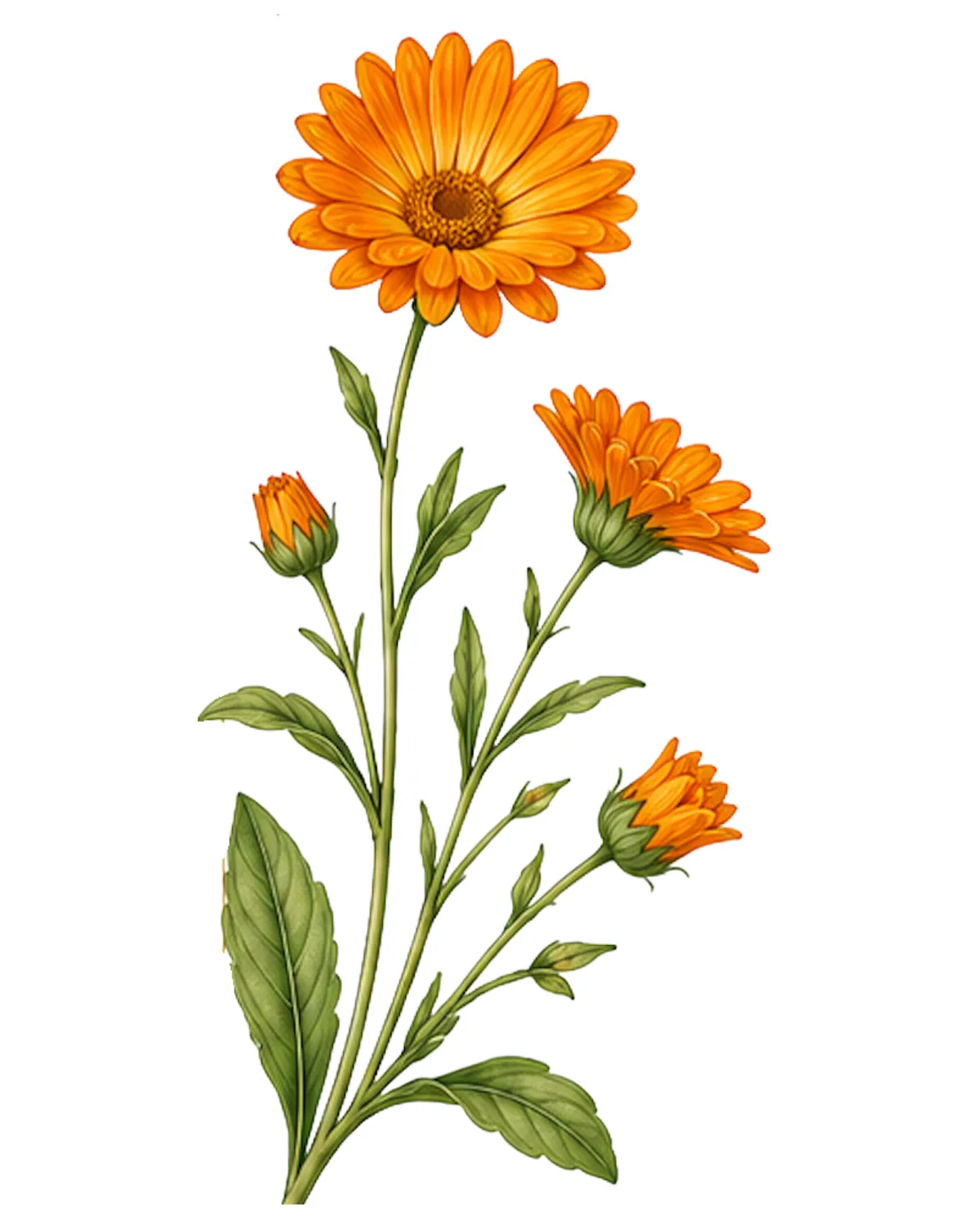
Calendula (Calendula officinalis), often called pot marigold, is one of the most beloved and gentle herbs a home apothecary can hold. With its warm, sunny petals in shades of gold and orange, it has brightened cottage gardens and healing traditions for centuries.
Unlike some of the stronger botanicals, calendula is treasured for its mild, nourishing nature. It is one of the first herbs many home herbalists reach for, prized as much for its beauty as for its long and gentle history of use.
The bright, resinous flower heads are the part most often used. Once harvested, the petals are carefully dried and reserved for teas, infused oils, salves, and countless other thoughtful preparations.
— Matthew 6:28
Botanical Information
Calendula belongs to the Asteraceae family — the same broad plant family that includes daisies, sunflowers, and chamomile. It grows as a cheerful annual (or short-lived perennial in mild climates), typically reaching 1 to 2 feet in height, and flourishes in full sun with regular blooming from spring through frost.
Botanical name: Calendula officinalis
Plant family: Asteraceae
Parts used: Flowers (petals and whole flower heads)
Native region: Southern Europe and the Mediterranean
Growth habit: Hardy, free-flowering annual
The flower heads carry a sticky, resinous quality that holds much of the plant's character. Because so many of calendula's prized qualities live in those resins, the way the flowers are dried and prepared makes a real difference — gentle handling preserves both color and potency.
Traditional Herbal Use
Calendula has been used in traditional herbal systems across Europe and beyond, nearly always treasured as a gentle, versatile flower suited to everyday care. Because it is so well-tolerated, it has long been a cornerstone of the home apothecary.
Traditional uses of calendula have included:
- Skin-soothing preparations made from dried petals
- Infused oils and salves for everyday external use
- Gentle herbal teas and infusions
- Botanical blends where a soft, sunny flower rounds out the mix
Because of its gentle nature, calendula pairs beautifully with both mild and stronger herbs, making it one of the most adaptable plants in the garden.
Active Compounds
Calendula contains several naturally occurring compounds that give it its distinctive golden character:
- Flavonoids — plant compounds abundant in the bright petals
- Triterpenoids — resinous compounds concentrated in the flower heads
- Carotenoids — the pigments behind calendula's golden-orange color
- Essential oils — aromatic compounds that lend the flowers their soft scent
These constituents are drawn out through careful preparation — especially through oil infusion, which captures the resinous, fat-soluble qualities the flower is known for.
Potential Wellness Associations
Within traditional herbal contexts, calendula has most often been associated with gentle, everyday care and the kind of soothing preparations suited to the whole family.
- Supporting herbal traditions that center on gentle, skin-loving botanicals
- Contributing to nourishing infused oils and salves
- Enhancing herbal blends with a soft, sunny character
- Complementing plant-based practices that emphasize comfort and care
How It Is Traditionally Used
Calendula is wonderfully versatile, lending itself to a wide range of gentle preparations.
Infused Oils
Dried petals are steeped in a carrier oil to capture the flower's resinous, fat-soluble qualities — the foundation for many salves and balms.
Salves & Balms
Calendula-infused oil is blended with beeswax to create soothing, skin-loving preparations for everyday external use.
Infusions & Teas
The dried petals make a mild, pleasant tea, often enjoyed on its own or blended with other gentle herbs.
Dried Preparations
Whole flower heads are dried and stored to preserve their color and resins for use throughout the year.
Safety Considerations
Calendula is considered a gentle, well-tolerated herb — though a few simple considerations apply.
- Those with allergies to plants in the daisy (Asteraceae) family may wish to use caution
- As with any new herb, it is wise to introduce it gradually
- Pregnant or nursing mothers may wish to consult a healthcare professional before internal use
- Always source flowers from clean, pesticide-free growing conditions
This herb may not be appropriate for everyone. As with all of our herbal education, this information is shared for learning purposes and is not intended as medical advice.
Interesting Historical Facts
Calendula's very name comes from the Latin kalendae — the first day of the month — a nod to its remarkable habit of blooming again and again throughout the growing season. To gardeners of old, it seemed the cheerful flower was always in bloom.
Across the centuries it earned countless affectionate names, including "pot marigold" for its place in the kitchen pot, where its golden petals were once used to add warm color to broths and butters. It was a fixture of monastery and cottage gardens alike, valued for both its beauty and its faithful, sun-following blooms that seemed to turn their faces toward the light.
Herbal Tea Preparation
Gentle Calendula Petal Infusion
Ingredients
- 1–2 teaspoons dried calendula petals
- 1 cup (250 ml) hot water
Instructions
- Place the dried petals into a cup or small teapot.
- Pour hot water over the petals.
- Cover and allow to steep for 5–10 minutes.
- Strain and enjoy.
Optional additions: honey · lemon balm · chamomile
A gentle, sunny cup — lovely on its own or blended with other soft herbs.

Practical herbal education, infused oils, natural wellness tools, and home apothecary resources designed to help you create effective herbal remedies with confidence.
Privacy Policy
Terms & Conditions
Disclaimer
Affiliate Disclosure
Medical Disclaimer
Returns/Refund Policy
Contact
YouTube
Email Newsletter
© 2026 Gathered Remedies • All Rights Reserved
Educational purposes only.
This website does not provide medical advice.
“Helping modern herbalists create practical remedies through infused oils, herbal education, and home apothecary tools.”