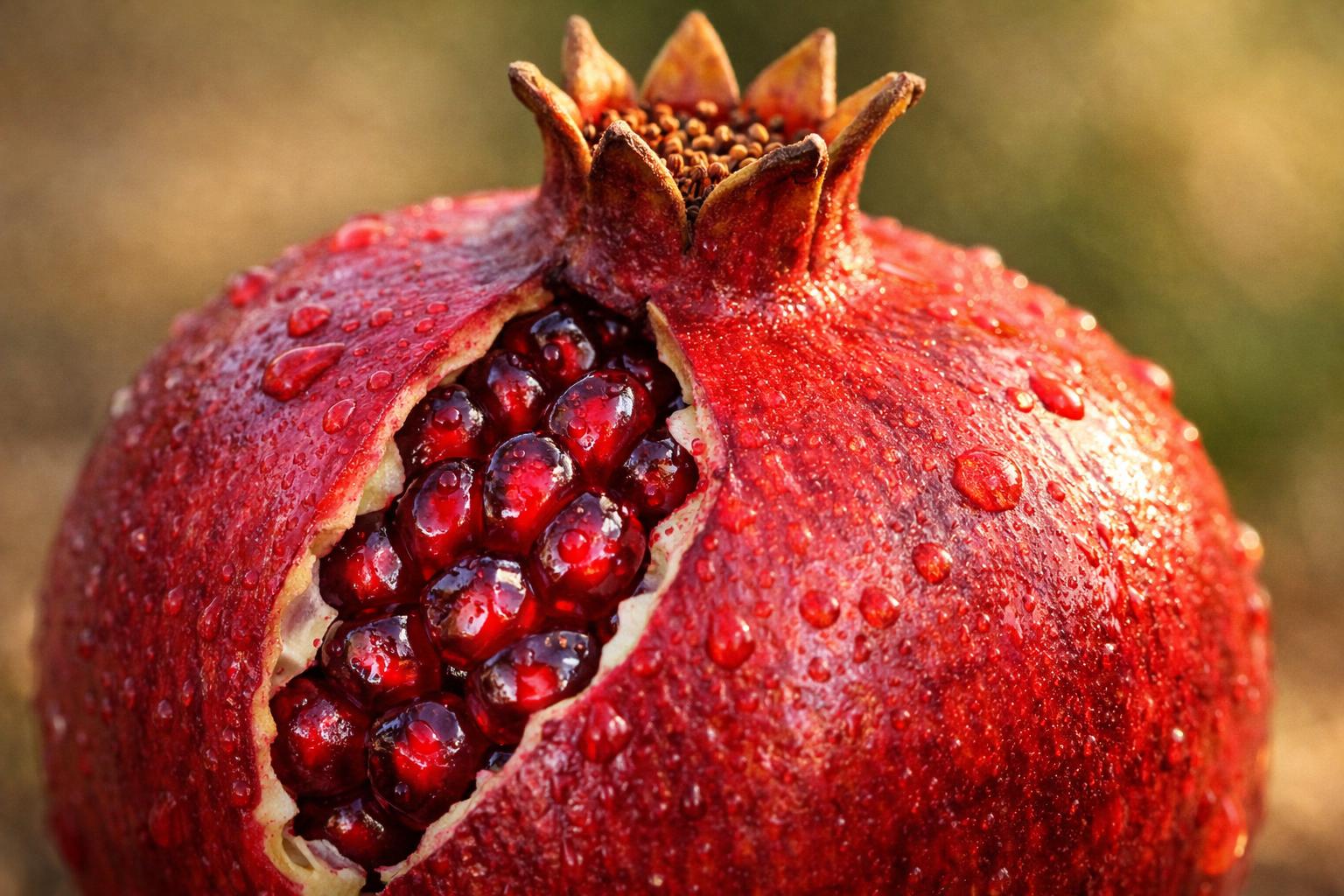
Pomegranate
Embroidered on the high priest’s robe and carved into the pillars of Solomon’s Temple.
🌿 Meet Pomegranate
Pomegranate is one of the most visually striking plants named in Scripture — a fruit packed with hundreds of ruby-red seeds, which made it a natural symbol of abundance, fertility, and blessing throughout the ancient Near East. It’s counted among the seven species singled out as markers of the Promised Land’s richness.
Beyond its symbolic weight, pomegranate appears in remarkably specific detail in the design of the priestly garments and the Temple itself — a level of architectural and ceremonial detail given to few other plants in the Bible.
✦ Why It's Remembered
Pomegranate carries a long history in Scripture and folk tradition. Here's what it's most known for.
📜 What Pomegranate Is Known For
Shared for educational and historical interest, not as medical advice.
🔬 Key Properties & Constituents
A little of the "why" behind the tradition.
Pomegranate arils are rich in punicalagins and other polyphenols, among the most heavily studied antioxidant compounds found in any commonly eaten fruit. Modern nutrition research continues to examine pomegranate juice and extract for cardiovascular and antioxidant benefits — giving this ancient symbol of abundance a very modern research profile as well.
🧴 Best Uses
Pairs Well With
💡 A Simple Way to Begin
The simplest way to connect with this one is at the fruit bowl — fresh pomegranate arils on yogurt, salad, or eaten plain carry the same fruit that decorated the hem of the high priest’s robe and the pillars of Solomon’s Temple.
⚗️ How to Prepare Pomegranate
Fresh / Juiced
Eaten fresh by the aril, or pressed for juice.
Dried Peel
Dried and used in traditional astringent folk preparations.
🛡️ Safety & Considerations
⚠ Before You Begin
- Pomegranate is well tolerated by most people as a food.
- Pomegranate juice can interact with certain medications, including some blood pressure and cholesterol medications — check with a healthcare provider if you take prescription medication regularly.
- If pregnant, nursing, or managing a health condition, check with a qualified healthcare provider before significant dietary changes.
✝️ A Biblical Connection
Few plants receive as much specific physical description in Scripture as the pomegranate. It’s named among the seven species that marked the richness of the Promised Land, embroidered in precise detail around the hem of the high priest’s sacred garments, and cast in bronze atop the towering pillars at the entrance of Solomon’s Temple. From priestly robes to temple architecture to love poetry in the Song of Solomon, this fruit’s hundreds of seeds made it an unmistakable ancient symbol of abundance and blessing.
Related Herbs
Ready to Make Something?
Choose a method guide and put your herbs to work.
Herbal Infused Oils
The complete Gathered Remedies guide — ingredients, Infuzium settings, and step-by-step method.
Read the Guide →Healing Salves
Turn your infused oil into a beautiful, spreadable salve with just beeswax and a few simple steps.
Read the Guide →Biblical Herbs Hub
Explore the full library of scripture-named plants, their history, and their healing traditions.
Explore the Hub →